
What do you think of when you think of Myanmar? Formally known as Burma, this country evokes a range of images when mentioned. Frequented in the news for humanitarian injustices, Myanmar is often seen as dangerous, socio-politically unstable, and a “no-go” for many travelers. This begs the question: Why did I go?
When planning my first trip to South East Asia, I began researching Myanmar because I wanted to explore places that often go underrated in the region. I quickly learned that due to the country’s history that it may be a “touch-and-go” sort of place. This means that I needed to prepare for my trip to Myanmar in more depth than perhaps when entering neighboring countries like Thailand or Laos. I started to follow international news sources, read other travelers’ accounts and asked around once I landed in Asia. The majority of people I spoke to warned against going not because it was “unsafe” (read: I caution the use of this word for a number of reasons that I will explain in a later paragraph), but because of the ethics surrounding supporting an economy that indirectly funds human rights abuses. Before going, I thought about the question posed above: “why Myanmar?”, and I opted to go in order to learn.
Following the above disclaimer, I want to briefly unpack the term “unsafe”. When we hear it, we often think of kidnappings, gun violence, women’s rights violations, and geo-political instability. However, in my experience, this term can be weaponized to harm a country’s image in a way that can dissuade the curious from going beyond the usual suspects, countries like France, Italy, and Thailand. While it is essential to read up on the destination you’d like to visit, it is critical to consider the country as a whole as destinations cannot be reduced to click-bait titles in the media.
In short: Is Myanmar unsafe?
Answer: For the general tourist, the country is not unsafe. One should avoid certain regions and read up on land crossings. Additionally, one will need to remain diligently aware of their surroundings, but the country is full of beauty and remains relatively untouched by tourism.
Now, without further ado: Where are the best things to do in Myanmar?

TEMPLES OF BAGAN
Located about 4 hours west of Mandalay, Bagan is an ancient city known for hot air balloons and temples. When arriving in the city, you will be asked to pay an entrance fee. This fee is equivalent to about $14 USD (25000 MMK) and helps maintain the condition of the buildings.
After arrival, you are free to wander, but it is worth noting that one’s accommodation, be it a hostel or hotel, is usually 15-20 minutes away from where the actual temples reside. To get around this problem, the most popular mode of transportation is an electric moped or scooter. Note: At the time of my trip, motorized scooters were not allowed to be driven by foreigners. Scooters can be rented in town for just a few dollars a day. Additionally, one can rent a driver for the day who will (usually on bike) show you the major temples, but for off-roading and further exploration, an electric scooter is needed.
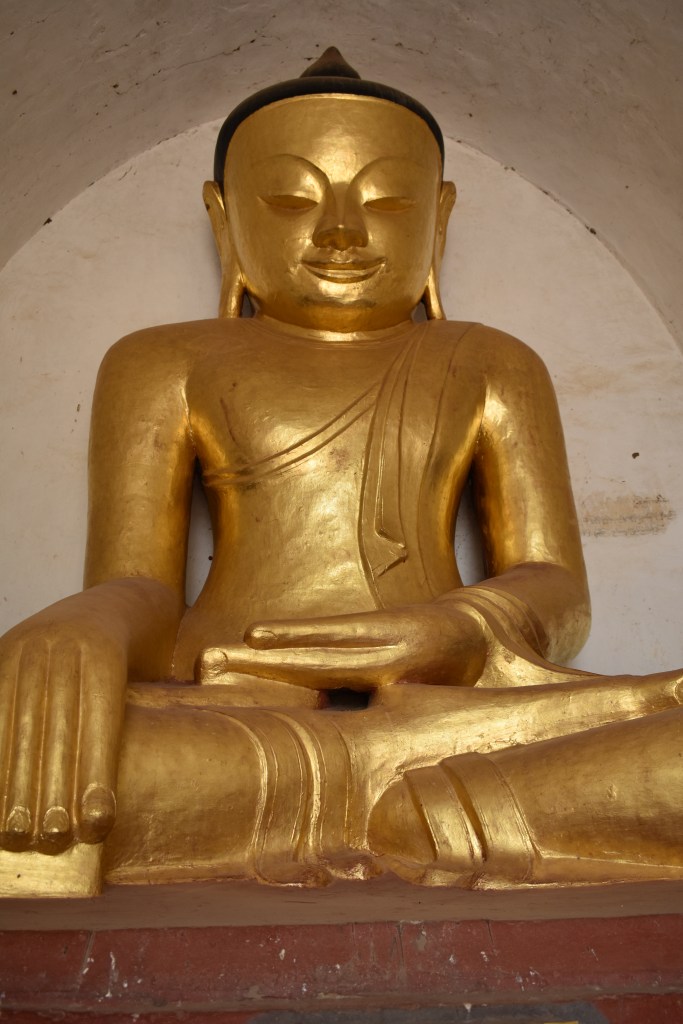
Once you’ve secured your transportation, you are free to roam! While many of the temples do not have names or are in partial disarray, it is worth getting a map to outline a route for the day. From there, you can explore each of the buildings that you see. Inside many of the temples, you will see golden Buddha statues like pictured below.
Inle Lake
The next stop on a tour of Myanmar must be Inle Lake! Nearly 6 hours from Mandalay, this town is well-worth the wait it takes to arrive via a local bus. The highlight of this location is hands-down taking a boat tour of some of the local attractions. From silk farms to tobacco leaves, you will learn about the industries that support the Burmese economy.
However, personally my favorite thing was simply people watching. While there has been some influence on the locals to “posture” for tourists, it is beautiful to watch boatmen head down along channels of the lake.
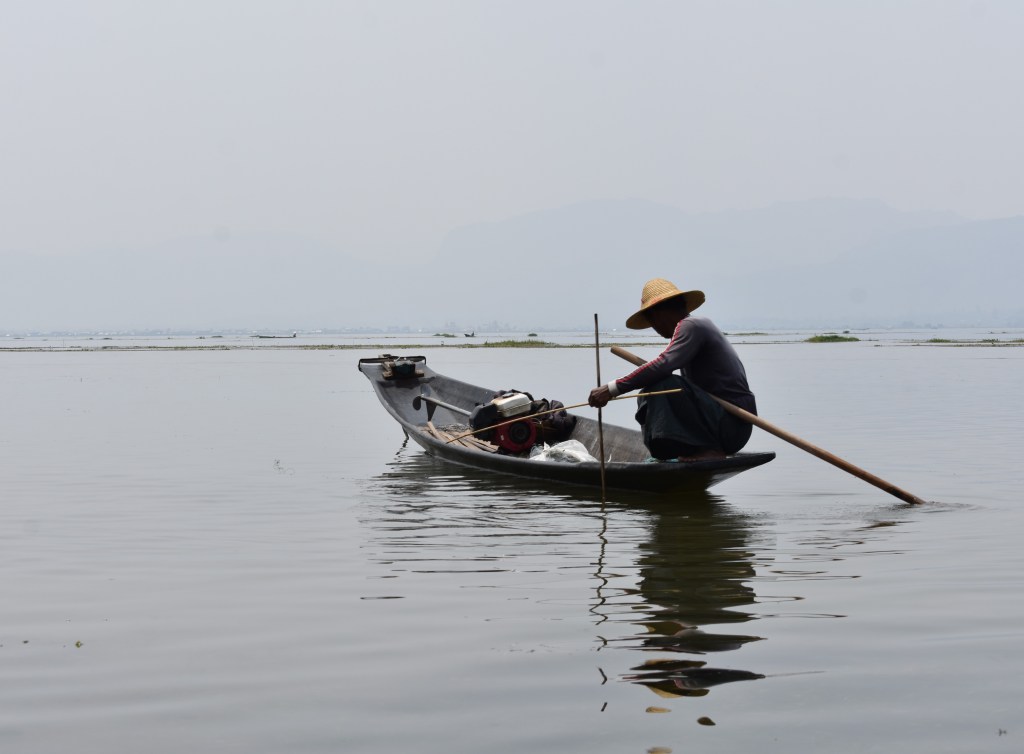
What do I mean by “posturing”? Sunset cruises along the lake have become increasingly popular for obvious reasons. Due to this sudden increase in tourism, the locals have begun ‘posing’ for the camera and asking for money as a result. While this is honestly not an uncommon practice across many countries, photographing people in Myanmar can be touchy.
Beyond this, it is essential to ask (verbally and via body language) to take someone’s photos. I am a firm believer that language barriers do not give photographers the right to transgress personal privacy boundaries. The photos in this article that feature people were asked / consensual.

Next stop: Mandalay, the capital of the North.
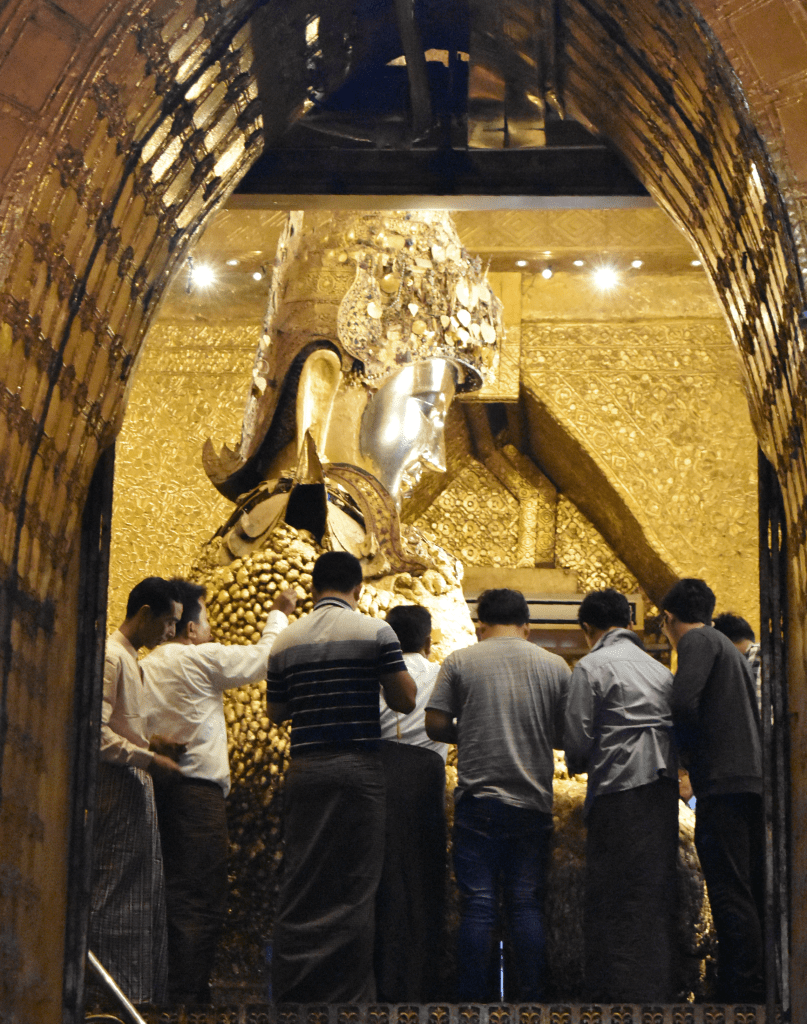
Home to many pagodas, this city is one-of-a-kind as is true for Myanmar to begin with. These golden shrines can serve as holy places for those who choose to worship there. The ambience of the temples of Mandalay are quiet. However, as mentioned in my Instagram post (@stampchaser_photography), Buddhism is the primary religion of 90% of the locals despite continued religious persecution of other minority groups. Below you can see Buddhist men praying before a large Buddha in a temple.
There you have it, the best 3 things to do in Myanmar include (but are not limited to):
1. Bagan, Myanmar
2. Inle Lake, Myanmar
3. Mandalay, Myanmar
In summary, Myanmar is a beautiful but complicated place to visit. Before visiting, one should educate themselves. Reading news outlets, asking fellow travelers for advice, and understanding the ethical implications of visiting Myanmar are essential to enjoying your trip.
 Stampchaser Photography